News from the MCAA - Furan-based polymers for a sustainable future - December 2025
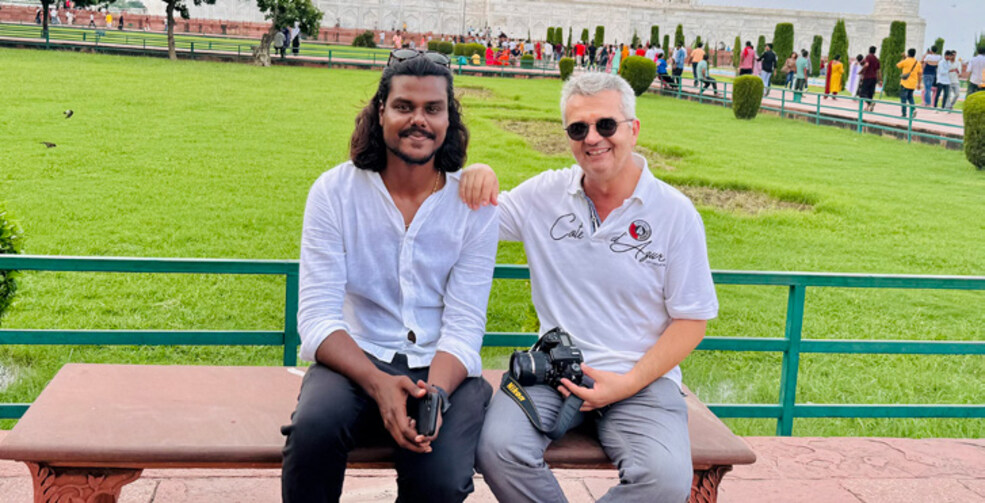
Johan Stanley’s journey through polymer chemistry, from Tindivanam to Thessaloniki and Utrecht, reflects a consistent focus on developing sustainable materials. His research on furan-based polymers, carried out under the Marie Skłodowska-Curie Actions programme, aims to replace conventional fossil-based plastics with bio-based and recyclable alternatives that support a circular and environmentally responsible future.
Early academic focus
Growing up in Tamil Nadu, in the southern part of India, I often observed food being served or packaged in plastic materials. This led me to question the safety and environmental impact of such products. Could the plastics or colourants contaminate the food or pose any health risks? This curiosity sparked my interest in polymer science.
During my master’s studies in polymer science and engineering, I deepened my understanding of polymers, their processing methods, properties, toxicity, and biodegradation. I also realised that most plastics used in food packaging are derived from fossil-based sources, which are harmful to both health and the environment. This awareness motivated me to pursue research on bio-based plastics made from renewable biomass, aiming for safer and more sustainable materials for the future.
Why furanic polymers? They come from renewable biomass and offer excellent mechanical strength, heat resistance, and gas-barrier properties, outperforming many petroleum-based plastics like polyethylene terephthalate (PET). However, obtaining high-molecular-weight polymers, such as polyethylene furanoate (PEF) required persistent experimentation (Stanley et al., 2023a, 2024).
One limitation of PEF is its lack of antimicrobial properties. To overcome this, we incorporated active agents to improve microbial resistance and also co-polymerised PEF with flexible biopolymers to reduce brittleness (Stanley et al., 2023b, 2025). Even though its biodegradability is limited, PEF is a recyclable polyester, making it a promising material for food packaging.
Crossing borders for doctoral research
In 2021, I started my PhD at the Aristotle University of Thessaloniki in Greece, with a Marie Skłodowska-Curie Actions Innovative Training Networks (MSCA-ITN) fellowship, FoodTraNet. My research focused on the synthesis of smart biopolymer materials based on 2,5-furan dicarboxylic acid with nanostructured surfaces with biocompatible and antimicrobial properties.
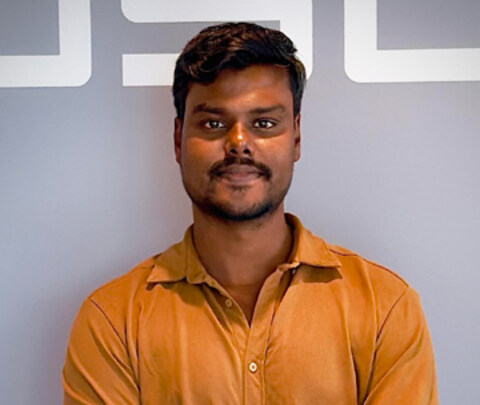
Johan Stanley Samuel Jayakaran is a postdoctoral researcher at the Institute for Sustainable and Circular Chemistry at Utrecht University in the Netherlands. A former Marie Skłodowska-Curie fellow within the FoodTraNet ITN, he earned his PhD in Polymer Chemistry from the Aristotle University of Thessaloniki in Greece. His research focuses on synthesising bio- based polymers and nano composites for circular economy initiatives.
The Marie Skłodowska-Curie experience
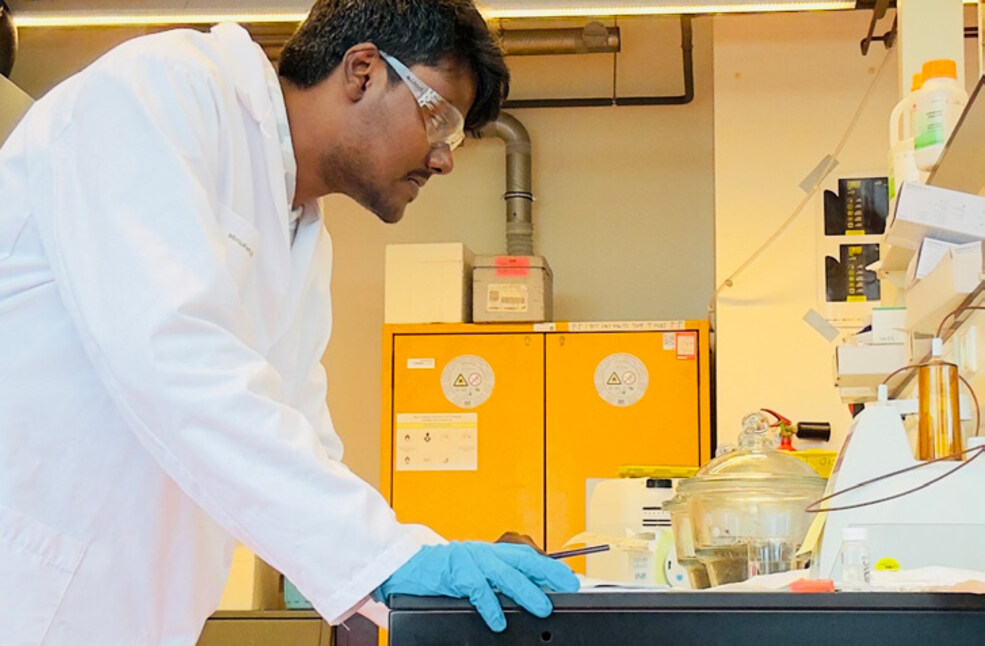
The MSCA-ITN fellowship provided me with far more than financial support. It offered a structured environment that combined research training with international exposure. As part of the programme, I completed two academic and one industrial secondment, which helped me experience different research settings, develop new technical skills, and strengthen my ability to adapt and think creatively.
International summer schools, workshops, and conferences strengthen networking and communication, essential qualities for a scientific career. Being part of this network showed me how sustainable materials research can bridge science, society, and industry.
Tips for Early-Stage Researchers
If you are considering a research career, it is important to define a clear area of interest and establish connections with research groups and laboratories that share similar goals. When relocating for research, plan ahead to secure visas, accommodation, and insurance before arrival. Once settled, network actively within both academic and local communities. Understanding your host country’s research culture helps you collaborate effectively.
Equally important is maintaining your mental well-being. Living far from home can be isolating, but joining social or cultural groups provides support. Remember that your research journey is as much about building confidence and resilience as it is about scientific discovery.
Continuing the journey at Utrecht
Today, as a Postdoctoral Researcher at Utrecht University, I continue exploring the synthesis of sustainable semi-aromatic polyesters from lignin-derived bicyclic monomers. The foundation built during my MSCA-ITN experience continues to guide me in synthesising bio-based polymers.
Every experiment reminds me that the pursuit of sustainable materials begins with curiosity but thrives through persistence, commitment, and teamwork.
Johan Stanley Samuel Jayakaran
Utrecht University, The Netherlands
References
Stanley, J., Bikiaris, D. N., & Fras Zemljic, L. (2023a). Effect of Monomer Type on the Synthesis and Properties of Poly (Ethylene Furanoate). Polymers, 15(12), 2707. https://doi.org/10.3390/ polym15122707.
Stanley, J., Bikiaris, D. N., & Fras Zemljic, L. (2023b). Synthesis of Poly(ethylene furanoate) Based Nanocomposites by In Situ Polymerization with Enhanced Antibacterial Properties for Food Packaging Applications. Polymers, 15(23), 4502. https://doi.org/10.3390/polym15234502.
Stanley, J., Bikiaris, D. N., & Fras Zemljic, L. (2024). Study on Impact of Monomers Towards High Molecular Weight Bio-Based Poly(ethylene furanoate) via Solid State Polymerization Technique. Polymers, 16(23), 3305. https://doi.org/10.3390/polym16233305.
Stanley, J., & Bikiaris, D. N. (2025). Synthesis and Characterization of Poly(ethylene furanoate)/poly(Ɛ- caprolactone) block co-polymers. Journal of the American Society for Mass Spectrometry. https://doi.org/10.1021/jasms.4c00397.